
Intellectual &
Developmental Disabilities
Metrocare offers a range of services designed to help individuals with intellectual and developmental disabilities live more independent and fulfilling lives. Our programs provide guidance, coordination, and community-based supports for individuals and families at every stage.
Intellectual & Developmental Disabilities
Metrocare offers a range of services designed to help individuals with intellectual and developmental disabilities live more independent and fulfilling lives. Our programs provide guidance, coordination, and community-based supports for individuals and families at every stage.
Support for individuals with intellectual and developmental disabilities.
Our goal is to help your loved one with an Intellectual or Developmental Disability (IDD) access the services needed to achieve the highest quality of life. Our IDD Services offer an extensive array of supports tailored to the individual’s specific need with the goal of your loved one living in the community in the least restrictive setting possible. Services are provided either through Metrocare directly or through our vast network of private and public partner agencies.
We are here to connect you and your family members to the help you need and to the provider of your choice. At Metrocare, we don’t see disabilities, we see diversity and unique abilities. We call it IDDiversity.

Services
Our LIDDA team determines if a person is eligible for state-supported services, enrolls individuals in programs, and coordinates ongoing services based on their individual needs across an extensive network of providers, public and private.
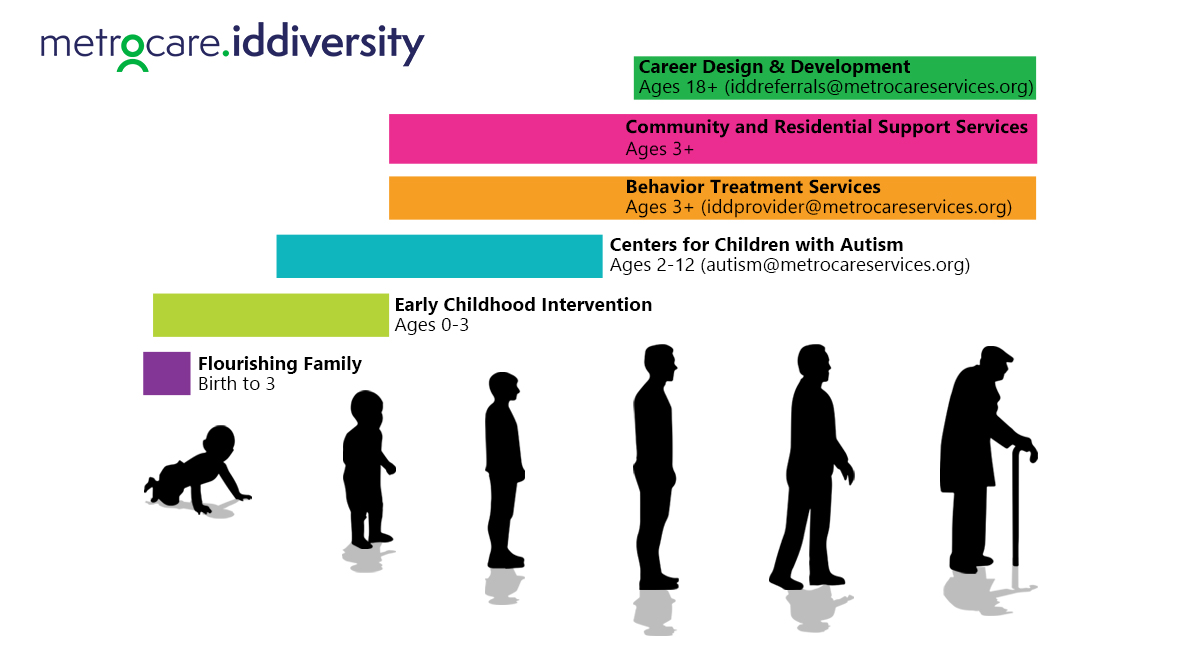
As an agency, Metrocare also offers certain developmental disability programs for adults and children. Learn more about our provider services from our Centers for Children with Autism and Early Childhood Intervention Services to our vocational training and day habilitation programs at Metrocare’s Career Design & Development Center.
Learn more about how we’re educating our local leaders about IDD through a first-of-its-kind training in Texas Here
What is an Intellectual and Developmental Disability?
An intellectual disability is characterized by limitations in intellectual functioning and difficulties in many everyday social and practical skills.
A developmental disability is attributed to a cognitive or physical impairment that results in limitations in areas such as self-care, language, and mobility.
An intellectual or developmental disability originates before the age of 18 years old.
What is a Pervasive Developmental Disorder?
Pervasive Developmental Disorders are a class of developmental disabilities that are characterized by severe impairments in multiple areas of development, such as social interactions and communication skills. Pervasive Developmental Disorders are also expected to be life-long and require ongoing services. Typical age of onset is before three years of age. Autism Spectrum Disorder is one of the most common in this category. Other include: Asperger’s Disorder, Rett’s Disorder, Childhood Disintegrative Disorder, or Pervasive Developmental Disorder – Not Otherwise Specified (PDD-NOS).
What is a Related Condition?
A Related Condition is a severe and chronic disability that is attributable to Cerebral Palsy, Epilepsy, Traumatic Brain Injury or any other condition, other than mental illness, found to be closely related to the symptoms of persons with an Intellectual or Developmental Disability. Like IDD, the condition typically manifests prior to the age of 22 and will continue indefinitely.
If you suspect your child or loved one has a developmental disability, call Metrocare now
Metrocare is the Local and Intellectual Developmental Disability Authority for Dallas County, which means we serve as the front door to coordinate all publicly funded IDD programs.
Our team will help you get on the Medicaid Waiver List, also known as the “Interest List.” The interest list can provide critical long term supports and funding for your loved one, but the wait can be over a decade long. So don’t wait! Call us today. All we need is your loved ones’ name and birthdate.
Frequently Asked Questions
Stay connected
Sign up for our newsletter